













Against ordinary turmeric
Trial one
12 weeks
- People
- 54 started, 52 finished
- Who
- Adults aged 25 to 55 with mild digestive discomfort
- Where
- Medica Tokyo Laboratories, Japan
- Led by
- Dr Taro Hirata
- Trial code
- MTL/GH RCT 0223
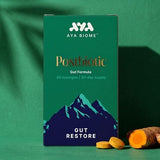 Gut RestoreFermented turmeric, fermented pomegranate and a heat-treated yeast
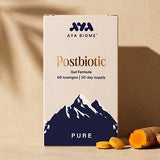 PUREFermented turmeric, nothing added to the active
 Women's WellnessWith fermented pomegranate, S-equol and vitamins B6, B12, D and K
 Men's WellnessWith fermented pomegranate, natto and vitamins B6 and D
 Ultimate LongevityOur most complete formula, as a daily drink
Shop all fiveEvery product, with its plans and prices
Take the quizFive questions to find yours
AYA BIOME™ Fermented Turmeric is the ingredient in every product we make. It has been through three human trials. Here is who took part, what changed and why fermenting it matters.

Randomised: chance decides who gets what. Double-blind: neither the people taking part nor the researchers know who got what until the end.
Against ordinary turmeric
Trial one
12 weeks
Against a placebo
Trial two
8 weeks
Against ordinary turmeric
Trial three
8 weeks
Trial one. The same dose, 500 mg a day, for the same twelve weeks: what changed on AYA BIOME™ Fermented Turmeric, and on ordinary turmeric beside it.
Digestive comfort
18%better digestive comfort, the trial’s main measure
Digestive symptom score (GSRS), lower is better
Why it matters. It is how your gut feels day to day, scored by the people taking part.
F. prausnitzii
3.09×as much F. prausnitzii, a key gut bacterium
Bacteria per gram of stool, on a log10 scale
Why it matters. It is the most abundant bacterium in a healthy colon, and one of the main makers of butyrate.
Butyrate
23%more butyrate, made by your gut bacteria
Butyrate per gram of stool (µmol/g)
Why it matters. Butyrate is the preferred fuel of the cells that line your colon.
hs-CRP
19%lower hs-CRP, a marker of inflammation
hs-CRP in the blood (mg/L), lower is better
Why it matters. Doctors use it as a blood marker of low-grade inflammation across the body.
Change from week 0 to week 12, 26 people in each group. The differences between the groups were statistically significant: p<0.0001 for digestive comfort, F. prausnitzii and butyrate, p=0.008 for hs-CRP.
Three human trials on our own core ingredient. Then 29 published human studies on the ingredients in the range, each one checked on PubMed. Human studies only, most of them in healthy adults.
Our own trials
Digestive comfort, gut bacteria, butyrate and hs-CRP (trial one)
See the trialsStudies on the ingredients, not on our products. Our own trials are above.
Counts are the studies listed on this page, chosen and checked by hand, not everything ever published. Results depend on the dose, the form and the people studied. Several used a different form from ours: curcumin rather than fermented turmeric, live rather than heat-treated yeast, ordinary rather than fermented matcha.
Our three trials come first. After them, every published study counted above, with a link to read it for yourself on PubMed.
 AYA BIOME™ Fermented TurmericOur trial one
Randomised, double-blind trial in adults aged 25 to 55 with mild digestive discomfort, comparing AYA BIOME™ Fermented Turmeric with ordinary turmeric, 500 mg a day for 12 weeks. Measured digestive comfort, gut bacteria, butyrate and hs-CRP.
Medica Tokyo Laboratories, Japan
The trial report says it was registered before anyone enrolled. The full report is not public.
AYA BIOME™ Fermented TurmericOur trial twoRandomised, double-blind trial in 60 adults, 30 in each group, comparing AYA BIOME™ Fermented Turmeric with a placebo drink that looked and tasted the same, for 8 weeks.
Medica Tokyo Laboratories, Japan
The full report is not public.
AYA BIOME™ Fermented TurmericOur trial threeRandomised, double-blind trial comparing AYA BIOME™ Fermented Turmeric with ordinary turmeric for 8 weeks. 60 people started and 56 finished.
The full report is not public.
Published studies on the ingredientsStudies on the ingredients, not on our products. Our own trials are above.
Turmeric and curcuminRandomised, placebo-controlled pilot trial in 30 healthy adults taking turmeric or curcumin tablets, each with black pepper extract, for 8 weeks, measuring gut bacteria in stool.
Peterson et al., 2018. Journal of Evidence-Based Integrative Medicine. PMID 30088420
Read on PubMedCurcuminRandomised, placebo-controlled trial in 60 healthy adults aged 60 to 85 taking 400 mg of a curcumin formulation, measuring attention, memory and mood after one dose and after 4 weeks.
Cox et al., 2015. Journal of Psychopharmacology. PMID 25277322
Read on PubMed Pomegranate
Randomised, placebo-controlled trial in 32 middle-aged and older adults with mild memory complaints, drinking pomegranate juice daily for 4 weeks, measuring memory and brain activity on fMRI scans.
Bookheimer et al., 2013. Evidence-Based Complementary and Alternative Medicine. PMID 23970941
Read on PubMedPomegranateRandomised, placebo-controlled crossover study in 19 trained young adults taking 1,000 mg of pomegranate extract before exercise, measuring blood flow, blood vessel width and sprint power.
Roelofs et al., 2017. European Journal of Sport Science. PMID 27644475
Read on PubMed S. boulardii
Randomised trial in healthy adults comparing the live yeast S. boulardii for 14 days, a 7-day antibiotic course, both together, or neither, measuring gut bacteria in stool.
Kabbani et al., 2017. Gut Microbes. PMID 27973989
Read on PubMedS. boulardiiRandomised, placebo-controlled trial in 50 healthy medical students taking the live yeast S. boulardii for 30 days before an exam, measuring exam results, stress markers in saliva and heart rate.
Karbownik et al., 2020. Nutrients. PMID 32438624
Read on PubMed S-equol
Randomised, placebo-controlled trial in 160 postmenopausal Japanese women taking 10 mg of S-equol a day for 12 weeks, measuring hot flushes and other menopause symptoms.
Aso et al., 2012. Journal of Women's Health. PMID 21992596
Read on PubMedS-equolRandomised, placebo-controlled trial in 101 postmenopausal Japanese women taking 10 or 30 mg of S-equol a day for 12 weeks, measuring wrinkles, skin moisture and elasticity.
Oyama et al., 2012. Menopause. PMID 21934634
Read on PubMedS-equolSystematic review and meta-analysis of 6 randomised trials in 779 women, on equol taken as a supplement or made by the gut from soy, measuring hot flushes around menopause.
Daily et al., 2019. Journal of Medicinal Food. PMID 30592686
Read on PubMed Vitamins B6 and B12
Randomised, placebo-controlled trial in 478 adults taking high-dose vitamin B6 or B12 for a month, measuring self-reported anxiety, mood and visual processing.
Field et al., 2022. Human Psychopharmacology. PMID 35851507
Read on PubMed Folate
Randomised, placebo-controlled trial in 144 healthy women aged 19 to 33 taking folic acid or methylfolate ([6S]-5-MTHF) for 24 weeks, measuring blood folate levels.
Lamers et al., 2006. The American Journal of Clinical Nutrition. PMID 16825690
Read on PubMed B vitamins
Systematic review and meta-analysis of 16 randomised trials (2,015 people) of B vitamin supplements in healthy and at-risk adults, measuring mood and stress.
Young et al., 2019. Nutrients. PMID 31527485
Read on PubMed Vitamin K2
Placebo-controlled trial in 244 healthy postmenopausal women taking 180 µg of vitamin K2 (MK-7) a day for 3 years, measuring bone mineral density and bone strength.
Knapen et al., 2013. Osteoporosis International. PMID 23525894
Read on PubMedVitamin K2Randomised, placebo-controlled trial in 42 healthy adults aged 18 to 45 taking 10 to 360 µg of vitamin K2 (MK-7) a day, measuring vitamin K status and blood clotting.
Theuwissen et al., 2012. British Journal of Nutrition. PMID 22289649
Read on PubMed Vitamin D3
Randomised, placebo-controlled trial in 238 adults aged 20 to 40 taking 5, 10 or 15 µg of vitamin D3 a day through the winter (22 weeks), measuring blood vitamin D levels.
Cashman et al., 2008. The American Journal of Clinical Nutrition. PMID 19064513
Read on PubMedVitamin D3Systematic review and meta-analysis of randomised trials in adults comparing vitamin D3 with vitamin D2, measuring how far each raises blood vitamin D levels.
Tripkovic et al., 2012. The American Journal of Clinical Nutrition. PMID 22552031
Read on PubMedNattokinaseRandomised, placebo-controlled trial in 265 healthy older adults taking nattokinase, an enzyme from natto, for a median of 3 years, measuring artery wall thickness and stiffness.
Hodis et al., 2021. Clinical Hemorheology and Microcirculation. PMID 33843667
Read on PubMedNattokinaseRandomised, placebo-controlled crossover study in 12 healthy young men, measuring blood clotting markers for 8 hours after one dose of nattokinase.
Kurosawa et al., 2015. Scientific Reports. PMID 26109079
Read on PubMed Inulin fibre
Randomised, placebo-controlled crossover trial in 34 healthy adults taking 16 g a day of an inulin-type fibre for 3 weeks, measuring gut bacteria and short-chain fatty acids.
Healey et al., 2018. British Journal of Nutrition. PMID 29307330
Read on PubMedInulin fibreSystematic review of 9 human studies in adults, measuring how taking inulin changes the make-up of gut bacteria.
Le Bastard et al., 2020. European Journal of Clinical Microbiology & Infectious Diseases. PMID 31707507
Read on PubMed Nicotinamide riboside
Randomised, placebo-controlled crossover trial in 30 healthy adults aged 55 to 79 taking 1,000 mg of nicotinamide riboside a day for 6 weeks, measuring NAD+ levels, blood pressure and tolerability.
Martens et al., 2018. Nature Communications. PMID 29599478
Read on PubMedNicotinamide ribosideRandomised, placebo-controlled trial in 140 healthy overweight adults taking 100, 300 or 1,000 mg of nicotinamide riboside a day for 8 weeks, measuring blood NAD+ levels and safety.
Conze et al., 2019. Scientific Reports. PMID 31278280
Read on PubMed Resveratrol
Randomised, placebo-controlled crossover study in 22 healthy adults, measuring blood flow in the brain and mental performance after single doses of 250 and 500 mg of resveratrol.
Kennedy et al., 2010. The American Journal of Clinical Nutrition. PMID 20357044
Read on PubMedResveratrolRandomised, placebo-controlled trial in 60 healthy adults aged 60 to 79 taking 200 mg of resveratrol a day for 26 weeks, measuring memory and brain scans.
Huhn et al., 2018. NeuroImage. PMID 29548848
Read on PubMed Matcha
Randomised, placebo-controlled trial in 61 older adults taking 3 g of matcha a day for 12 weeks, measuring memory and thinking skills.
Sakurai et al., 2020. Nutrients. PMID 33256220
Read on PubMedMatchaRandomised, placebo-controlled trial in 51 healthy adults aged 50 to 69 taking matcha, caffeine alone or a placebo for 12 weeks, measuring attention and work rate under mild stress.
Baba et al., 2021. Nutrients. PMID 34067795
Read on PubMed Quercetin
Randomised trial in 35 healthy adults taking 50, 100 or 150 mg of quercetin a day for 2 weeks, measuring blood quercetin levels and antioxidant and metabolic markers.
Egert et al., 2008. The Journal of Nutrition. PMID 18716159
Read on PubMedQuercetinSystematic review and meta-analysis of 11 studies (254 people), measuring the effect of quercetin on endurance exercise capacity.
Kressler et al., 2011. Medicine and Science in Sports and Exercise. PMID 21606866
Read on PubMed Black pepper
Randomised crossover study in 16 healthy adults drinking a black pepper drink before a meal, measuring appetite, blood sugar and gut hormones.
Zanzer et al., 2018. Food & Function. PMID 29691526
Read on PubMedShowing 9 of 32
Trial one put fermented against ordinary turmeric for one reason: to show what fermenting adds.
Step 1Curcumin is the best-known compound in turmeric. It hardly dissolves in water, and less than 1% of a standard dose reaches your blood.
As the turmeric ferments, its curcumin gains four hydrogen atoms and becomes tetrahydrocurcumin. Not curcumin any more.
 Step 3
Tetrahydrocurcumin is more water-soluble and more stable than curcumin, and studies find higher levels of it in the blood after the same dose.
Where it is made
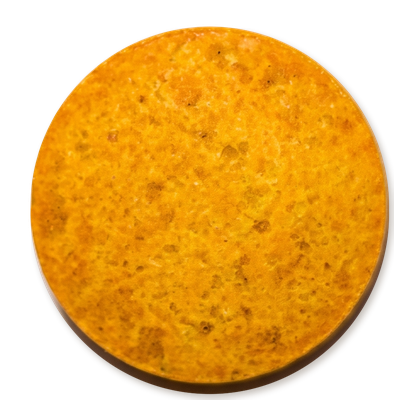
If your question is not here, ask us. A person will answer.
Contact usNo. The trials tested AYA BIOME™ Fermented Turmeric on its own, and in trials one and two people took it as a drink. Every product gives you the same daily amount.
Not in these trials. Gut Restore, Women's Wellness, Men's Wellness and Ultimate Longevity add other ingredients, which were not part of them.
The full reports are not public.
Your first purchase comes with a 90-day money-back guarantee. One claim per household.
Get started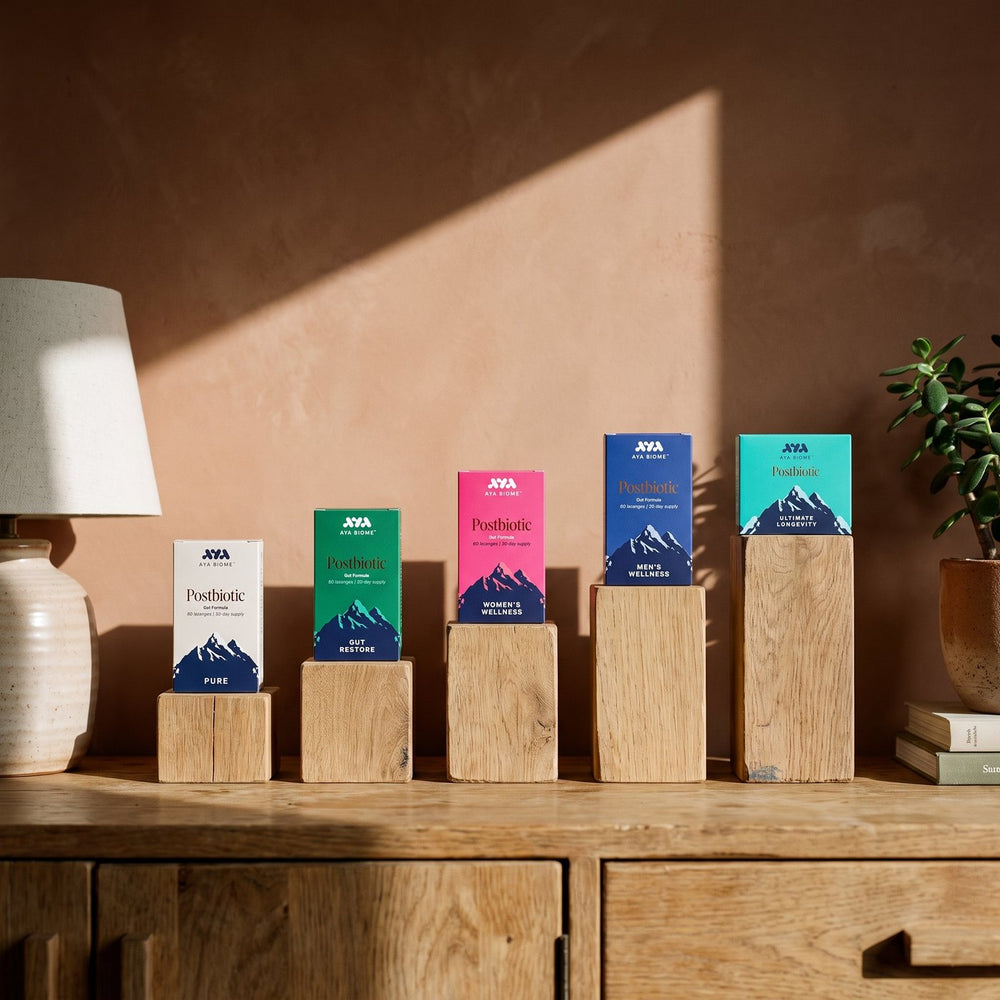 Black FridayFree GoZen + bookwhen you spend £80
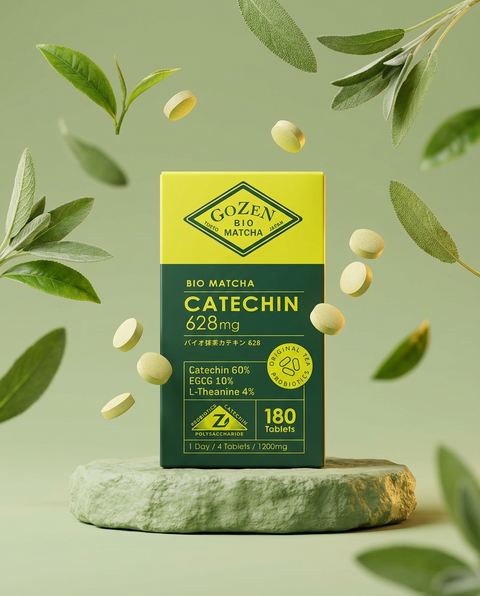 Worth £45
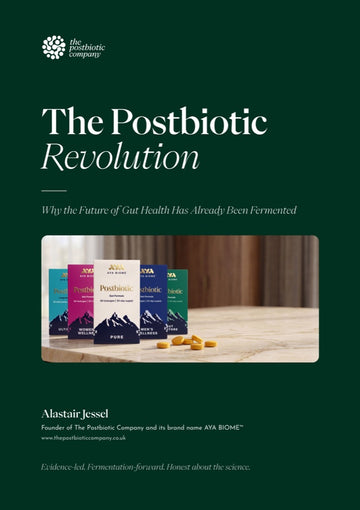 Worth £9.99
Sure you want to go?
Plus our ebook (worth £9.99) and free Tracked 48 delivery, until Mon 30 Nov. Sign up and we will remind you before it ends.
*By submitting my email, I agree to receive marketing emails from The Postbiotic Company: launches and science notes before anyone else. Unsubscribe at any time.